
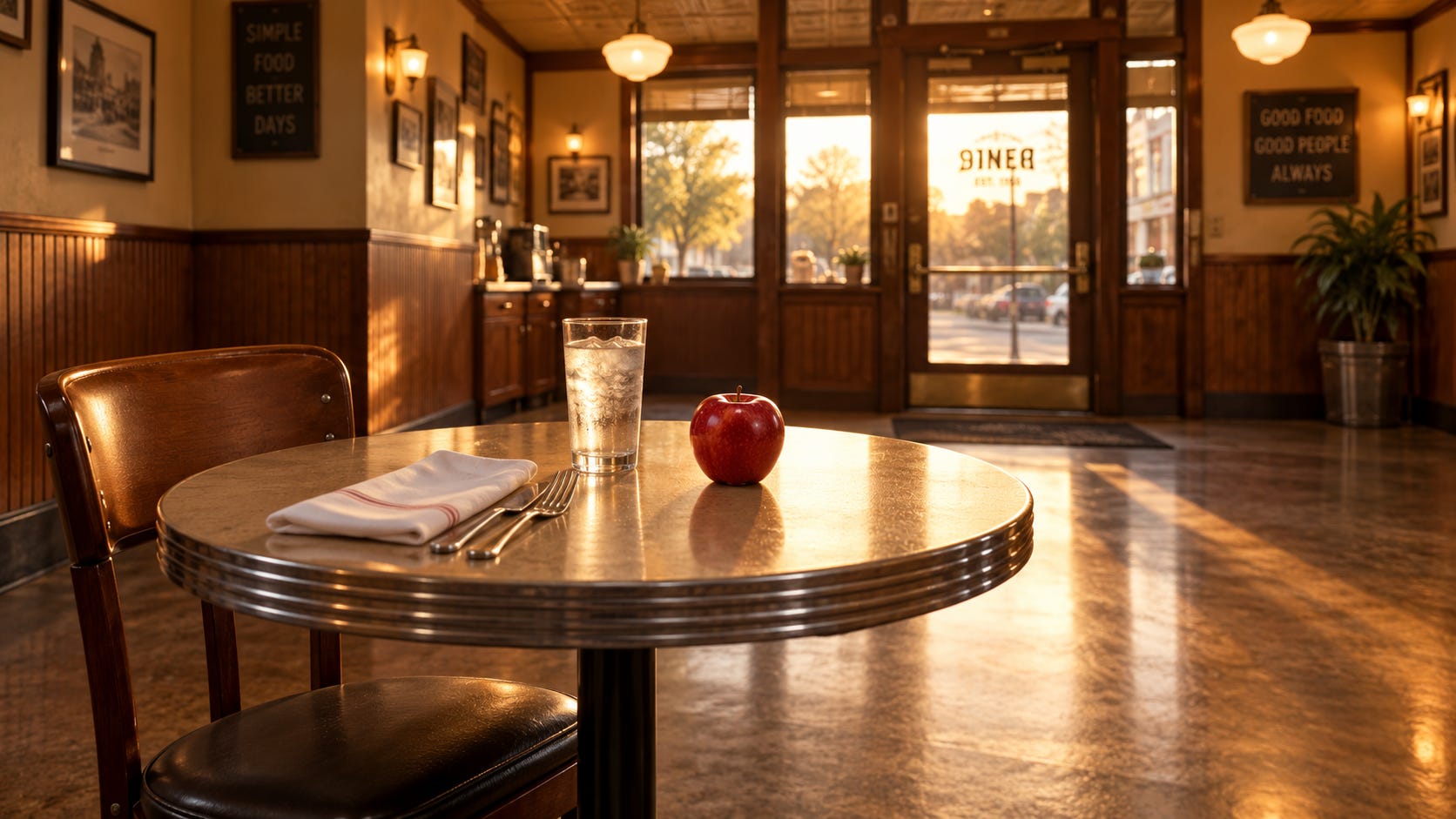
Picture a diner at lunch hour with only one server. She’s seating the customer, taking the order, pouring water and drinks, cooking the food, plating the food, serving the food, refilling drinks, giving out checks, and taking payment at the register. Every table is full. Patrons are flagging her down wanting a refill, wanting their check, complaining the burger was undercooked, asking for more ketchup for the fries.
That was my workday for the first stretch of the COVID remote era. All of it happening in my guest bedroom with a work computer, monitor, webcam, and microphone.
When I was the IT manager for one of the colleges, back in the days of the Aces, the chaos was grim. Everyone in the college occupied one building, and it was incredibly convenient for faculty and staff to take an elevator up to my office or walk down a flight to stop in for help. Multiple interruptions a day. I battled a growing resentment inside me as I stopped what I was working on to take care of them in the moment. That building frustration came from my focus getting disrupted while working on technical issues from a demanding client who went through appropriate channels to request my time, and was in line waiting for their issue to be resolved. In those brief moments where I didn’t have an in-person client and completed an update to one of my department servers, I dreamed about a workday where I could work on my work in peace.
I got that wish when I moved to the Canvas Admin position. But the chaos followed me, just in a different form. As the sole Canvas administrator for the university, the volume of requests during those early remote months of COVID was staggering. Faculty were elbowing and clawing their way to me to get their course issues resolved. I found myself spread way too thin, trying to serve everyone all day with no structure. No schedule. No boundaries. Just an open door with messy tables that haven’t been cleaned, and a growing crowd of people in the doorway wanting to be served.
My wife saw the toll Spring 2020 took on me. I’d stagger down the stairs after the workday ended, lie down on the sofa, put my forearm over my eyes, and try to forget everything that had just happened. But it was now after-work time, relating time, evening activity time, and I had no energy left in my tank for family life. The job was consuming everything, and the person I loved the most was getting my least.
Something had to change. So I redesigned the diner.
First, I locked the front door. Only I would decide when a customer came in to eat. One hungry person at a time. I could see the line of people outside on the sidewalk, stretching down the street, but for this new experiment I had to allow the line to exist, had to allow the disappointment at not providing immediate service to all, and had to focus on one person at a time. I ripped out most of the tables and booths, keeping one table in the center of the diner with plenty of room around it for elbow room and enough space to just sit and enjoy the experience. I threw out the chipped standard white plates so many ate off of in the past and invested in quality stone dishware. I bought new cloth napkins and introduced new silverware; utensils that looked nice and signaled to the customer this was a quality establishment they were in. I limited the menu to only a few entrees that previous customers raved about, thus eliminating decision fatigue for the eater, and less for me to keep track of in the kitchen since I was still preparing every meal myself.
I could hear the complaints from outside. “I’m hungry! Let me in! It’s time to eat! Why isn’t your door open?” I genuinely felt bad about it. It went against my Prime Directive, my core ethos, to serve everyone who needed help. The Council of Wraiths assembled and began deliberating on my decision to renovate.
Here’s what the redesigned diner looked like in practice. Four hour-long consults each workday: 9 a.m., 10 a.m., 2 p.m., and 3 p.m. Not 30-minute slots, because I’d learned that limited amount of time wasn’t long enough to address every question. Once I helped resolve a client’s Canvas course issue effectively and efficiently, they had other questions pop up. When a customer receives knowledgeable service, they want more of it. Also, with a 30-minute timeframe, one consult would bleed into the next reserved time slot, like a doctor running behind because they gave their patient the attention the situation required, making the next patient wait as a consequence. And I felt bad about cutting a consultation short for a client because someone else was next in line. It was the state of affairs at that time, but as a customer I never liked being told time was up when I was enjoying my experience. Sixty minutes proved to be a luxurious amount of time for full attention to the client’s issue, plenty of room for follow-up questions, and if we ended early, both of us got some precious minutes back in our workday to, you know, go to the bathroom. Or refill a water bottle. Instead of back-to-back-to-back-to-back meetings with no room to think or process what just happened.
The time slots were reservable via my online calendar scheduler, the link embedded in my email signature (which reached many, many clients every day) and posted on the Canvas support webpage. First come, first served. That’s the new standard.
My workday started at 7:30 am. Before the first consult, I spent the early morning triaging emails that came in overnight and working on big-ticket projects. My lunch hour was mine, sacrosanct, without interruption. After lunch, more email triage. And I planned time at the end of the workday to reflect on what had been done and make mental notes about what would be awaiting me the next morning. I had to wash the dishes and silverware, clean the table surface, mop the floor, and clean the kitchen to put everything back in its place. My workday ended at 4:30. I would not be accommodating a 4:27 pm drop-in consultation because it happened to be convenient for a faculty’s schedule. I was nervously trying to allow waiting in line to be part of Canvas support, because there was only one of me to serve my clientele. And my mental landscape mattered to me.
I never asked management for permission to set this up. They were so busy with their own projects and meetings that my Canvas Admin role operated in a kind of benign neglect with very little oversight and direction. I was given the autonomy to modify my workday, and I took it. Since no faculty were complaining up the chain, and all the requests for help were taken care of in a quick timeframe, nobody questioned it. The initiative worked because I trusted my own instincts of what the workday required, and the institution’s inattention gave me the room to act on it.
During the consult itself, I quit my email application. I quit Microsoft Teams. Only Zoom and my web browser was open with one tab: the client’s Canvas account. They had my full, undivided attention for that hour, even though my mind was quietly dreading everything piling up during the consult.
But in the diner, none of that showed. I opened the door, greeted the one customer, escorted them to their table where a cool glass of ice water was poured and ready. Utensils were polished. An attractively clean, minimalist, classy menu awaited them on the table. I took their order, provided a free appetizer while I chatted with them from the kitchen as I cooked their meal, learning about their day, commiserating with the stress going on in their life. As I prepped the plates, I told them how glad I was that we were able to meet in the diner today. I watched them feel welcome as the conversation was focused on them. I served their meal without tripping over other customers’ backpacks on the floor, without dodging people moving all around me, without dropping plates and having to redo the dish. I then sat down at the table with them and continued chatting while they ate. When I saw they’d finished, I quietly removed their plates while talking about their next visit to the diner, set a shiny, crisp apple down on the table for them to take as a parting gift, set the bill on the table with a $0 balance, and thanked them for coming in.
They were always appreciative. And I mean always.
After they left to move on with their day, I cleaned the table, set up fresh utensils, napkin, and a new menu, and greeted the next customer. Same process. Same attention. Same one table.
Eventually the din of complaints outside faded in volume. The pile of requests after the consult decreased as the remote era slowly morphed into masked in-person society and work resumed in a new normal. My four consults a day experiment was working well. The one-table diner experience let me reclaim energy internally, and it proved that limiting access didn’t mean limiting care. This success made the Council of Wraiths adjourn and disband. No guilty verdict was needed.
If you’re reading this and recognizing your own workday in that opening paragraph, I want to tell you something. The open door isn’t generosity, even though it feels like it and looks like it. Your institution will praise you for it. But unstructured availability isn’t sustainable. I believe the quality of your service degrades in direct proportion to the number of tables you’re trying to serve at once. Your clients deserve your full attention, and they can’t get it when you’re mentally cooking three other meals while taking their order. If you’re the only server in a diner full of customers, you don’t need more tables. You need fewer. Here’s a secret...nobody is going to give you permission to remove them. You’re going to have to do it yourself, and you’re going to feel guilty about it, but the guilt will fade as you see the improvement in your output as well as your internal happy tank.
The diner is still successful years later. Four reservation slots, same times. Same boundaries established. Same one table.
I didn’t learn this from a management seminar or a productivity book, though Jason Fried would probably nod knowingly if they saw it. I learned it from burning out in a guest bedroom while my wife watched the person she married disappear into a sofa cushion every evening, then psyche up to do it all over again the next day. The redesign was the right decision that happened at the right time to make me better at my job.
More later...