
I’d landed my first management position, IT manager for one of seven colleges at Western Washington University, and the learning curve was steep. Four servers, three computer labs, network shares on Active Directory, and over 120 faculty and staff clients. All by myself. No staff. The two people who could have helped, my predecessor and a peer IT manager, weren’t in a charitable mood to assist someone new to the role. So I had to figure it out alone. Budget landscape, infrastructure, the daily avalanche of “my computer won’t” from faculty who didn’t know my name yet and didn’t care to learn it.
I asked the Dean’s Office for staffing. They told me there was no budget for FTE or part-time employees, but I could hire work study students. The federal student aid program would cover the compensation. Not much more guidance than that. I cold-called Financial Aid, the Registrar’s Office, anyone who might point me toward the right person. Eventually someone emailed me a link to post a job description. I’d never written one, so I found other postings on the site and borrowed the professional language until it sounded like I knew what I was doing. Basically, I needed students to handle tier one computer issues while I focused on the more complex work.
I posted the description. And waited.
Two days later, an applicant. An undergrad in a non-technology major. I scheduled the interview and spent most of it asking who he was as a person. His professional demeanor struck me immediately. Quiet, kind, mature beyond his years. I believed then, and I believe now, that I could train almost anyone to troubleshoot a computer issue. What I couldn’t train was character. I needed someone with solid people skills, someone who was teachable, and someone I’d actually enjoy sharing a small, one-room IT office with for a couple of hours a day. He checked every box. I hired him on the spot, starting the following week. I needed a couple of days to figure out the paperwork to process a work study hire, but I kept that part to myself.
Two weeks later, another applicant. Another non-tech major. She was outstanding. Completely sparkly in demeanor, eager to learn, and exactly the person I’d want greeting a faculty member who just came storming in because their classroom podium computer stopped working. I hired her on the spot, starting the following week.
A third applicant followed soon after. Computer science major, quieter in personality, but I could see the technical depth immediately. I thought he’d make a great peer teacher to the first two, someone who could explain the why behind the fix. I hired him on the spot, starting the following week.
A few weeks later, a fourth applicant. Another technology major, funny, a bit brash without being eyebrow-raising in a professional environment, strong technical instincts, and someone I could tell would be a good fit for the work. I hired him on the spot, starting the following week.
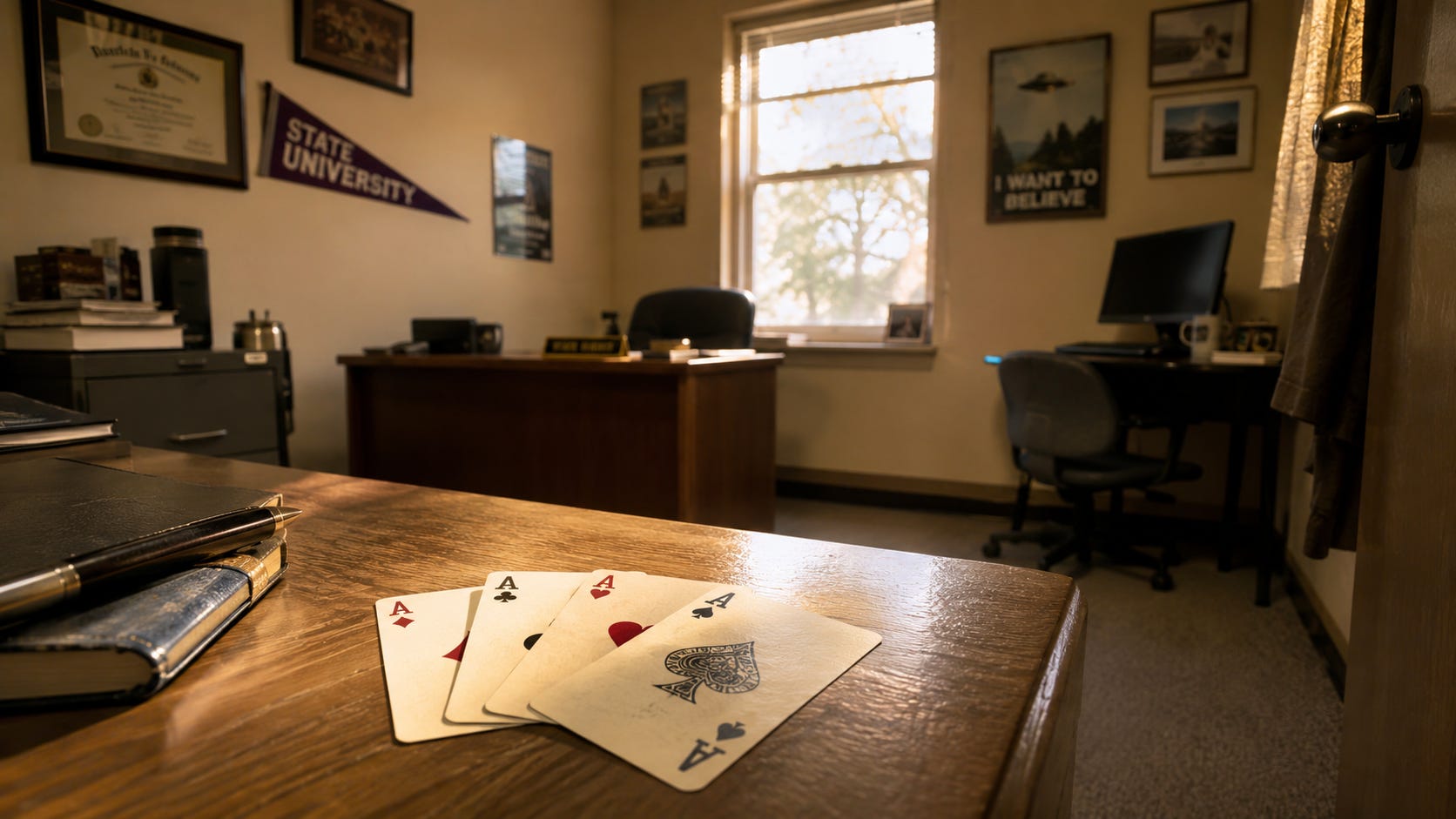
I had assembled my four Aces.
I built a rotation schedule. Each Ace worked a two-hour block when they weren’t in class, which gave me nearly half a day of student support coverage every workday. I set clear expectations: show up for your shifts, dress professionally, and if you have a quiz or a final that conflicts with a work shift, tell me ahead of time. Their academics came first. I would not let my IT support needs supersede their classwork. That was a non-negotiable.
In those early weeks, I walked them through the tier one landscape. Here’s what you’ll encounter. Here’s how a non-technical faculty member might describe the problem. Here’s how you resolve it, often in their office, on their turf. My Aces learned it the first time. I didn’t have to repeat myself. One of them created a guidebook documenting the steps for future student staff without being asked. Very enterprising, indeed.
I held monthly staff meetings with all four, closed door, no drop-in clients. I asked how the work was going, what concerns they had, what issues they were seeing from their perspective, how I could be a better manager to them, and how their classes were going. I got to know their personalities, the way they interacted when two of them overlapped in the office at the same time. It was the kind of team I didn’t know I could build because I’d never been given the chance in the past.
Then the moment arrived.
A tenured professor wandered into the office, walked right past my student staffer’s greeting, ambled up to my desk, and announced they had a computer problem. I asked my Ace to accompany the professor back to their office to take a look. I knew they had the skills.
The professor looked at my student and said, “Oh, I see you have minions helping with tech support now.”
I didn’t look at my Ace. I stood up from my desk. Slowly. I looked down at the professor, who was considerably shorter than me, and I enunciated every word with deliberate calm.
My student staff will not be referred to as minions. They are my employees, and I am proud of them. They are students of Western Washington University, and they will be referred to with dignity and respect. You are obviously unaware of how talented my student support staff are. They are my Aces. I have full confidence that they will be able to assist you with your computer need.
I held the professor’s gaze. Lingering silence. On purpose.
The professor was rattled. They hadn’t expected a public rebuke. But they had no recourse. They told my Ace to follow them, trying to regain some control over their situation, and left the office.
Five minutes later, my Ace came back, smiling. Issue resolved. I asked them to close the door.
“I apologize on behalf of that professor for the insensitive way they referred to you. You, and your fellow support staff, are very talented, and I am very proud of the work you do for this college. Don’t ever forget that.”
They thanked me. I changed the subject and moved on to a tech issue that had landed in my inbox. We had work to do.
After two or three months on the job, my Aces were handling the front line. They’d ask me clarifying questions when the nuances of a situation were unfamiliar, and I gladly walked them through it. I tested the waters with hour-long meetings away from the office. No crises when I came back. They wrote down the details of drop-in visits while I was gone, and we took care of them together afterward. I tested again with doctor’s appointments that took me off campus for two or three hours. My Aces were piloting the ship.
Eventually, I saw a day on the schedule where eight hours of Aces coverage lined up across the workday. I sent an email to all college personnel letting them know I would be taking a Thursday off, and my four student employees would be providing IT support for the college in my absence. By then, my clients recognized the faces in my office. They were used to these students visiting their offices to troubleshoot problems. It was a normal Thursday for my Aces.
For me, it was something bigger. I was letting go of the reins on a support standard I had built for myself as the sole IT employee for the college. A standard nobody asked me to maintain at that level. A standard that existed because I couldn’t imagine anyone else caring about my clients the way I did. My four Aces proved me wrong, and I was happy to see this.
Naturally, my students didn’t stay forever. Two Aces graduated, and I took all of them to lunch to celebrate the graduate and thank them for their work. One Ace found a work study position in the Computer Science department that better aligned with where his career was heading. I took him and the remaining Ace to lunch, too. And after two and a quarter years as the college IT manager, I got hired into my current role as the university’s Canvas LMS Administrator. I let my final Ace know I wouldn’t be their manager anymore and gave them the option to stay on under the Dean’s Office until my successor was hired, or pursue other work study positions with the university.
No reunion scene. No final team huddle. Just enjoyable lunches off campus, quiet but meaningful thank-yous, and five people heading in five different directions.
I’ve managed projects since then, but I’ve never managed people. I think about that sometimes. Four students who weren’t looking for careers in technology support taught me that the methodology I’d been practicing with clients worked just as well with a team. Read the person. Hire for character. Teach the rest. Protect them fiercely. And when they’re ready, get out of the way.
More later...