
In my mid-20s, I was trying to learn how to be a better man in the dating world. I read a book whose title I’d rather not disclose, but one line from it has never left me: “Success is preparation meeting opportunity.” If I’m dressed well, if I smell decent, if I don’t have boogers hanging out my nose or atrociously bad breath, and if I’m a kind and entertaining date, some women will say yes to a second date.
I applied that line to everything.
If I can learn everything about a topic before the moment arrives, I will be successful when that moment comes. In my explanation, in my problem solving, in my confidence walking into a room. The preparation isn’t optional, it’s mandatory for me. I don’t fly by the seat of my pants with technology support. I study, I rehearse in my head, I visualize the scenario, and when it’s time, I deliver.
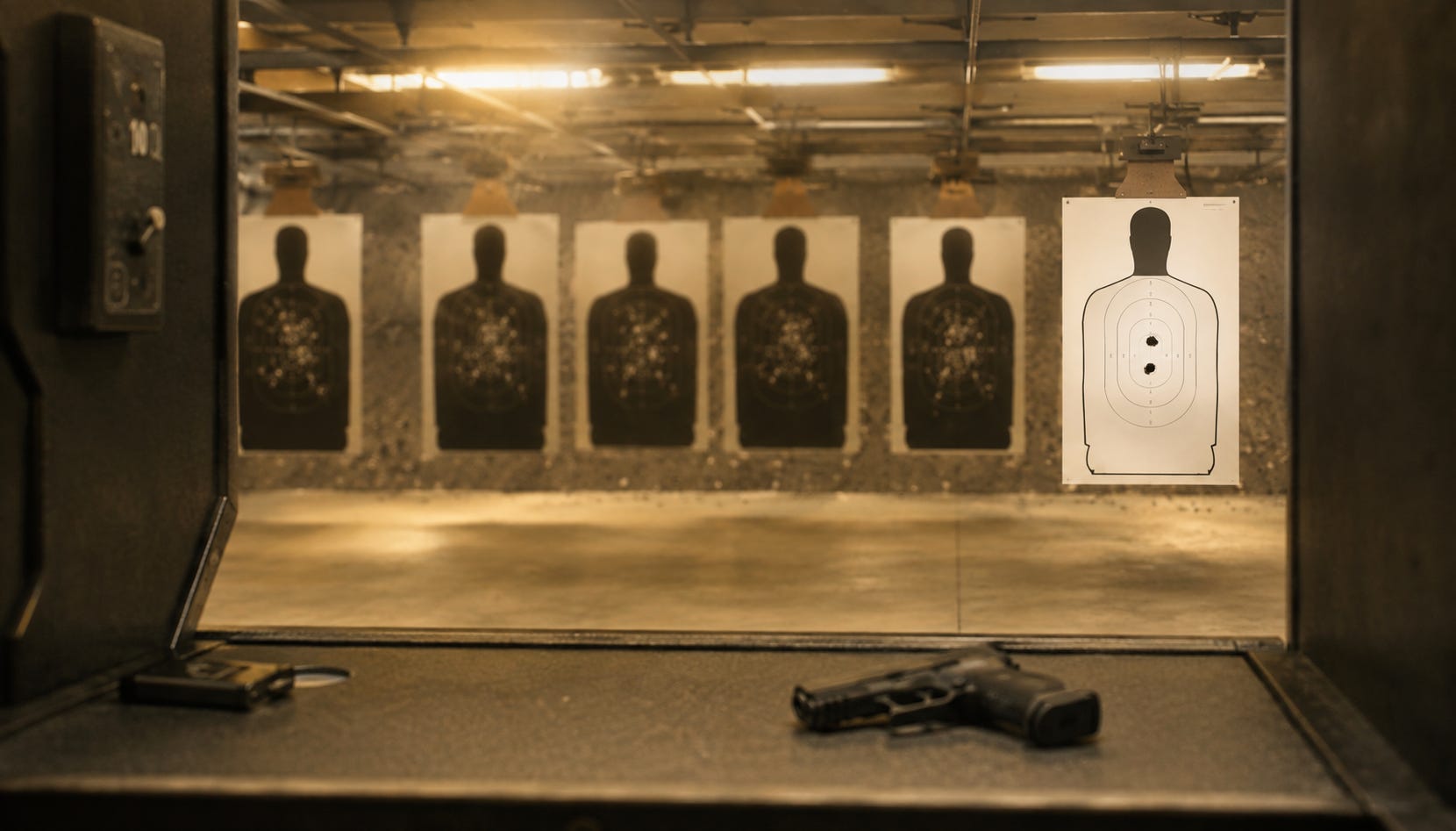
There’s a scene in the first Men in Black movie that has turned into professional ethos for me. Will Smith’s character is in a recruitment competition with a room full of military and law enforcement candidates. In the weapons portion of the evaluation, targets pop up like a shooting gallery, aliens and civilians, and every candidate immediately opens fire, riddling the alien targets with bullets. Smith just watches. Doesn’t raise his gun. After everyone empties their clips, he fires two shots at one unexpected target and calmly explains why. His explanation was observational, it was assessing, it was measured, and it was bang-on correct, no pun intended.
That’s me at work, in my professional environment.
An email arrives, management and tech colleagues are CC’d. A faculty client is at their wit’s end. Something in Canvas isn’t working. They want answers now. Some managers feel the immediate need to respond, sometimes directing me to act even though I’m already on the original thread. Some colleagues fire off a reply within minutes, asking the client to submit a ticket.
I don’t respond to the client. I think about the client’s issue. I visualize the issue. I log into the client’s Canvas account and see exactly what they see. And then I see what they don’t see. I see the solution, often a user error, and I see the path to explain it without making anyone feel dumb.
About an hour later, I fire. One email to the group. Informed, articulated, containing exactly what the client needs. If you have follow-up questions, I’m here. Otherwise, I think we’re in a better space.
Even though I gave myself permission years ago to say “I don’t know,” I still grit my teeth every time. I wrote an essay about the power of those three words, and I stand by what I wrote. But I still experience a flash of something close to shame when I have to say those three words. I view it as a weakness, even knowing it isn’t. Preparation is I don’t know’s kryptonite.
Here’s where it shows up with clients. When someone calls me stressed about their technology, I feel their stress. My first impulse is to breathe in short bursts, talk fast, interrupt them with solutions. But something inside me says, “Hold.” And I hold. I say nothing. I listen to their every word.
Stressed people don’t like silence. So they keep talking. And because they keep talking, I often get the one critical nugget of information that tells me what’s actually happening, what changed, and what needs to change to get things fixed for them. If I’d interrupted with my first instinct, I’d have missed it.
The calculus of a consigliere places a mandate on me: the client gets the spotlight. All of it. I’m not performing on stage. I’m identifying what changed about their technology, determining what needs to happen for them to return to normalcy, and doing what I need to do to get them back to regular breathing. That’s the job. Getting them breathing again. Get their shoulders to relax. Get them to happy hour sooner. That’s my credo.
This calculus has served me well. Extraordinarily well, not gonna lie. Thirty years of preparation meeting opportunity. Rarely embarrassed. Rarely caught without an answer. Rarely exposed.
But there’s a darker side to this.
In Spring 2020, the world shut down. My university, like every university, scrambled to move instruction online for the upcoming quarter. Roughly 2,000 faculty members needed to learn how to teach through Canvas and Zoom and Teams within weeks. Faculty who had built successful careers standing in classrooms and delivering lectures were now facing their students in a computer monitor with a bunch of students in little square windows, some of whom might not even turn their cameras on.
Two of my colleagues stepped up to run live training webinars, multiple sessions every workday, walking scores of anxious faculty through the tools and concepts they’d need. It was heroic work. Those two stood in front of the chaos, fielded the fear, absorbed the frustration, and delivered. I have deep respect for what they did during that stretch.
I wasn’t one of the presenters.
I saw the webinar plan forming and I knew, with a certainty I felt in my chest, that I wasn’t going to be effective in that modality. I know what happens to me in live training when an attendee derails the flow. Someone doesn’t grasp a concept, raises their hand, interrupts with a question, and the whole room follows. I lose focus. My brain glitches. I can’t recover the thread. I’m the university’s Canvas administrator. I know the platform better than anyone in that room. So I volunteered for the background roles instead: moderating the chat Q&A, monitoring the shared inbox, responding to the avalanche of individual faculty requests pouring in.
Those contributions mattered. The inbox alone was a firehose, and someone had to catch it. But if I’m honest with myself, I chose those roles because they weren’t public-facing. I chose the background because the foreground carried a risk I wasn’t willing to take: the risk of looking less than completely knowledgeable in front of hundreds of stressed faculty during the most high-stakes Canvas training moment in the university’s history.
The sharpshooter picked his position carefully. But this time, I’m not sure the calculus was purely strategic. I think some of it was fear.
I think about that sometimes, now that I’m preparing to stand at a podium myself in October. The methodology that made me effective, the preparation, the restraint, the refusal to fire until I’m certain, is the same methodology that kept me offstage when the stage needed me most. The same instinct. Doing two different jobs depending on whether I call it caution or fear.
I don’t have a logical explanation for that. The sharpshooter doesn’t always know, in the moment, whether he’s waiting for the right shot or just afraid to pull the trigger. All I know is that my preparation continues. And the next time the moment arrives, I intend to be standing in front of the room.
More later...