
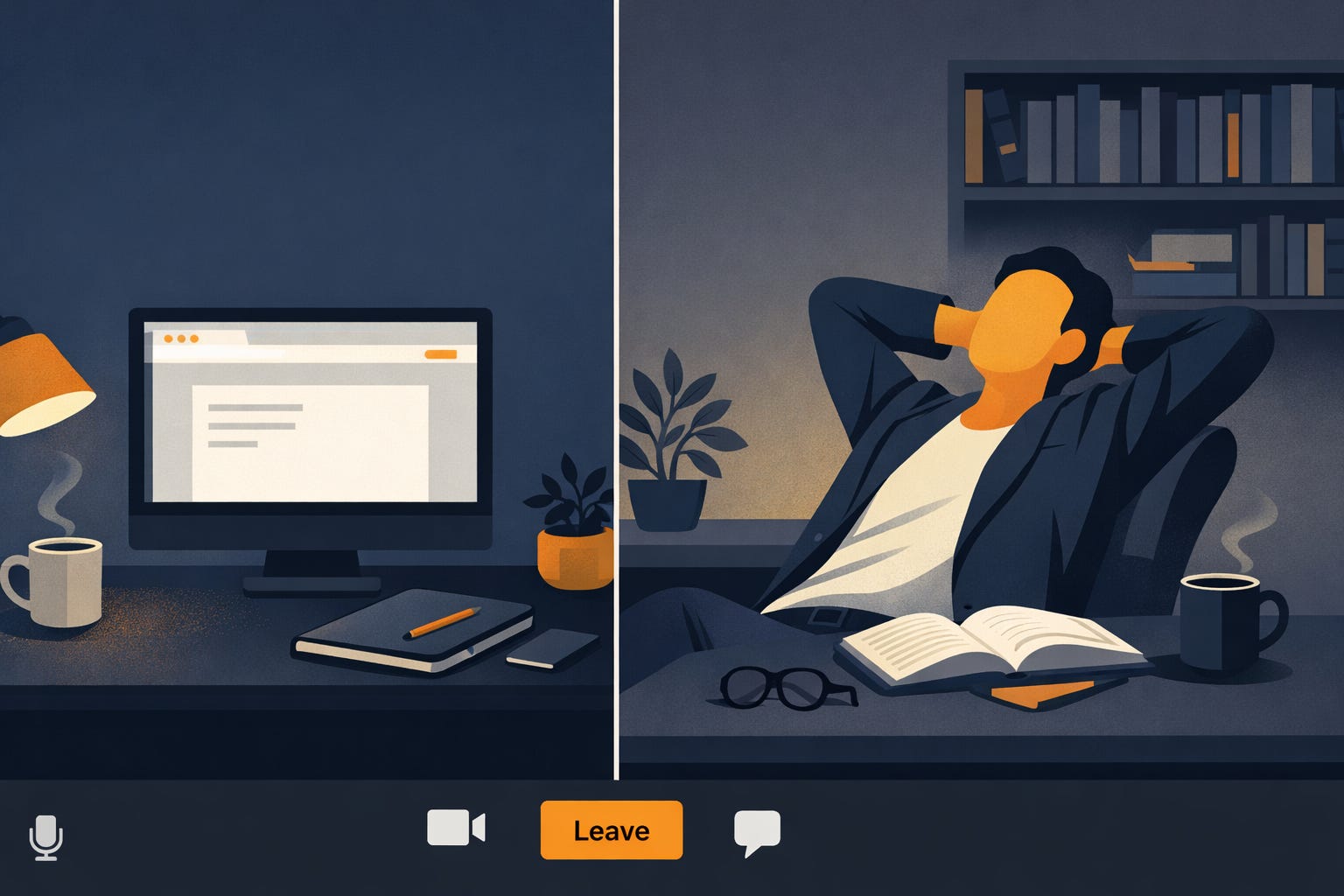
The technical work hasn’t started yet. I haven’t looked at a single Canvas setting in the course, clicked a single menu item, or offered a single solution. We are thirty seconds into a Zoom call and the most important work of the consultation is already done.
Most technology support professionals don’t know this window exists.
Before the call begins, I’ve done one thing: I’ve read the email. Not skimmed it. Read it. I know why this person asked for a meeting, what they’ve already tried, and roughly what kind of answer they’re hoping for. By the time they see my face on their screen, I already know their name, their course, and their problem. They will not have to explain themselves twice.
My browser window is already shared. Not my desktop — just the browser, clean and uncluttered, with their Canvas account ready to go. No minimizing windows. No apologizing for the sticky note collection on my taskbar. The space is prepared. They arrive to a room that was set up for them. And the pillow is fluffed.
When my client enters the video consultation I greet them with: “Good afternoon, [first name]. How is Thursday treating you so far?”
Not “how are you.” That question has no real answer and everyone knows it. A specific question about a specific day requires a specific response — and in the two seconds it takes them to answer, something shifts. They’re not in crisis mode anymore. They’re in conversation. That transition is the whole game.
If we’ve exchanged a few emails before landing here, I’ll follow up with: “I’m glad we can meet live-time like this. I can imagine you’re getting tired of seeing my nerdy emails flooding your inbox.”
Just between you and me, I sent exactly two follow-up emails. This is not flooding. But I’m giving them permission to have been mildly frustrated anyway — and I’m taking the weight of that friction onto myself before they have to decide whether to mention it. The self-deprecating “nerdy emails” does its own work: it signals that I’m not precious about my expertise. The email format wasn’t right for the problem. That’s on me, not them.
Or: “I appreciate you taking the time to meet with me during a busy Thursday. I have a feeling ten or fifteen minutes of walking through some nerdy stuff together will be better than a bullet-point filled techy email.”
Something just happened. I told them exactly how long this will take — and made it sound almost enjoyable. “Nerdy stuff together” is conspiratorial. We’re both in on the joke. The anxiety about an open-ended call with an IT person evaporates in one sentence.
Now I’m ready to begin. And here is the move that took me the longest to learn:
“I see in your email you’re interested in taking care of [their particular task]. Why don’t you guide me to what you’re seeing in your course?”
I ask them to navigate before I start driving.
Most technology support professionals arrive and immediately slam the accelerator on their own. They quickly navigate to the problem and begin explaining. The client becomes a spectator in their own consultation. I do the opposite. I ask them to direct me first — tell me where to go, show me what they see — because sometimes the destination they have in mind isn’t where they actually need to end up. They’re in the backseat telling me to take a left at the stoplight, into the parking lot on the right, and park in this spot. I get them there. But they chose the destination.
By the time I say my first technical word, the client knows several things that have nothing to do with Canvas. They know I prepared for this meeting. They know I’m not in a hurry. They know I’m not going to make them feel foolish for asking. They know approximately when they’ll be back to their workday.
None of this happened by accident. Every piece of it is deliberate — the shared screen, the specific greeting, the self-deprecating acknowledgment of the email exchange, the time estimate wrapped in humor, the navigator in the backseat. It took years of iteration to develop and I couldn’t have told you I was doing it consciously until I started writing these essays and had to examine it out loud.
The client doesn’t experience any of this as technique. They experience it as relief.
That’s the thirty seconds most IT professionals are spending on the wrong problem. They’re already thinking about the technical solution. I’m thinking about the person who needs to feel safe enough to receive it.
The technical work starts after that. But the relationship — the thing that determines whether they email me next time instead of suffering in silence or firing off a ticket into the void — that was settled before I said anything useful at all.
More later...