
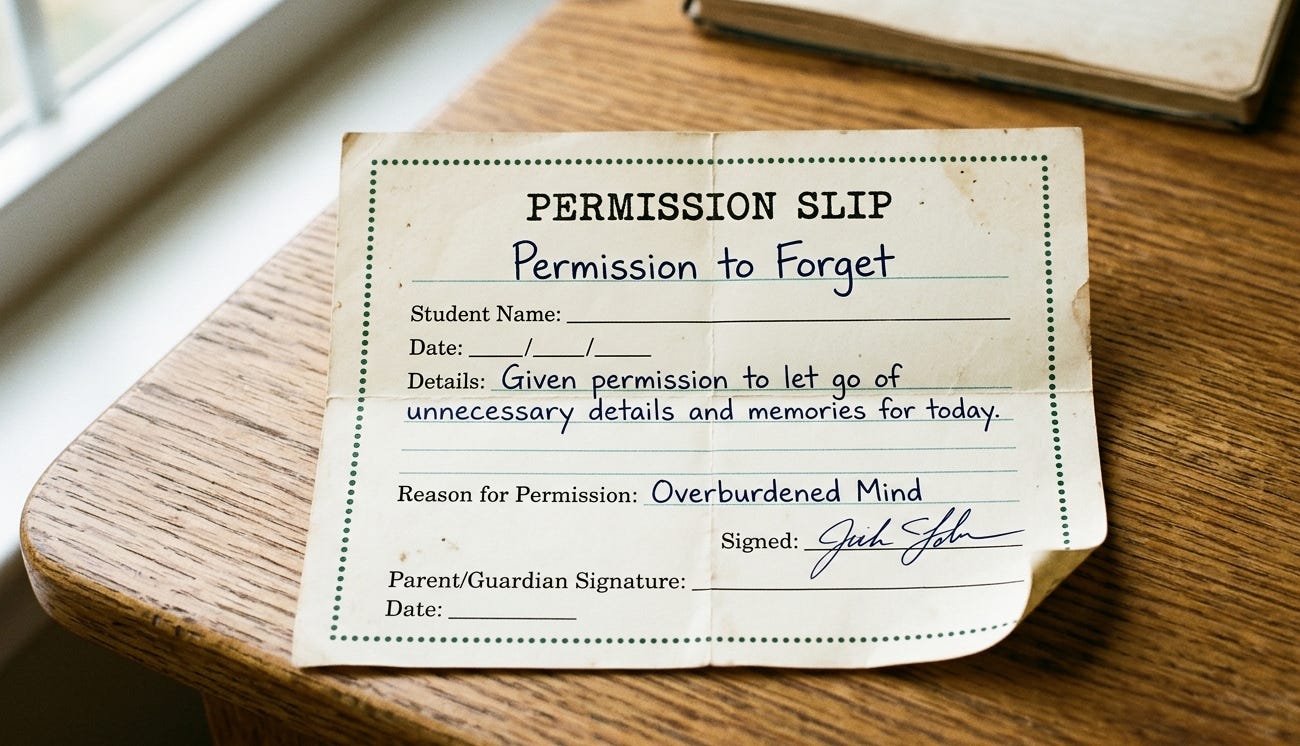
When I’m in a tech consult with a client I will be demonstrating a multiple-step process as we walk together toward resolving an issue. Once I get done with my explaining, I say something to them, and it changes the course of the meeting every time:
“Feel free to not memorize this. If it comes up again, I’m happy to walk through it with you.”
I enjoy watching what happens when I say that. Their shoulders drop, and I see a small smile emerge. Sometimes I see them exhale a breath they didn’t know they were holding. It’s not dramatic, it’s physical. Nobody says “Why thank you! I will not remember this.” That would be strange. But something shifts inside them. The test they didn’t know they were bracing for just got cancelled.
Here is the irony. Most of my clients are university professors. They stand in front of a classroom, deliver information once, and expect their students to retain it well enough to be assessed on it weeks later. That’s the paradigm they live inside every day. But when they are the ones sitting across from the holder of knowledge, someone who knows more than they do about an unfamiliar subject — and they’re the novice — suddenly that paradigm feels impossible. They know what it’s like to teach. They’ve just been reminded what it feels like to learn.
So how did I come up with this statement? Early in my career, a faculty member sat across from me while I spent ten minutes carefully walking through what had gone wrong with their tech situation and how to handle it next time. When I finished, they thanked me and said, “I’m probably going to forget all of what you just said and come back later to have you explain it again.” It was honest, can’t fault them for that. But it also dismissed every minute I had just invested in them. I realized something in that moment: if the permission to forget was going to exist in my consultations, it was going to originate from me; offered freely before it could be taken. There is a difference between grace given and effort dismissed, and I wanted to be on the right side of that line.
Clients arrive at my appointments carrying two problems. The first is technical — something isn’t working and they need it fixed. The second is invisible — the quiet dread of being judged for not knowing. The latter is almost always heavier for them than the former.
I know IT colleagues who have a much different way of treating customers. “We’ve posted announcements about this on the university website.” “We sent emails to all users about this change.” “We have an extensive knowledge base that can answer your questions.” Those statements sound helpful. They aren’t. What the client hears is: this information was available, and you failed to find it. Your presence here in this consultation is your failure, not mine. Upon receiving this, the client’s shoulders tense and their walls go up. Shortness of breath ensues. They either stop asking for help entirely and suffer alone, or they come back next time already angry.
Here is the part that surprises people: giving permission to forget works better than expecting people to remember. When you take the pressure off, people are actually present for the conversation instead of frantically trying to memorize steps they’ll never recall under stress anyway. And when they do forget — because of course they forget, that’s human — they come back sooner. Before the small problem becomes a crisis. Before the frustration morphs into shame.
Permission to forget isn’t a technique. It’s a declaration of what you believe the relationship is for. You are not here to perform competence for me. You are here to get help from someone who is glad you came back.
More later…