
I know what getting fired feels like. Twice.
The first time I was thirteen years old, cleaning boats in a boatyard. The second time I was sixteen, working the grill at a family-owned restaurant that ran like a Denny’s. Both times, the reason was the same: poor work performance, and quite frankly, I didn’t do well with bosses’ authority. Both times, I deserved it.
I was not a motivated young man. I was a kid doing the minimum, probably less than the minimum, in jobs that felt like obligations rather than opportunities. It was nice to make a little money to buy the newly-released Miami Vice II soundtrack on CD and a few basketball cards at the drugstore, but nobody handed me a philosophy to operate by. Nobody sat me down and explained what it meant to take pride in your work. I was just a teenager collecting a paycheck and doing a bad job of earning it.
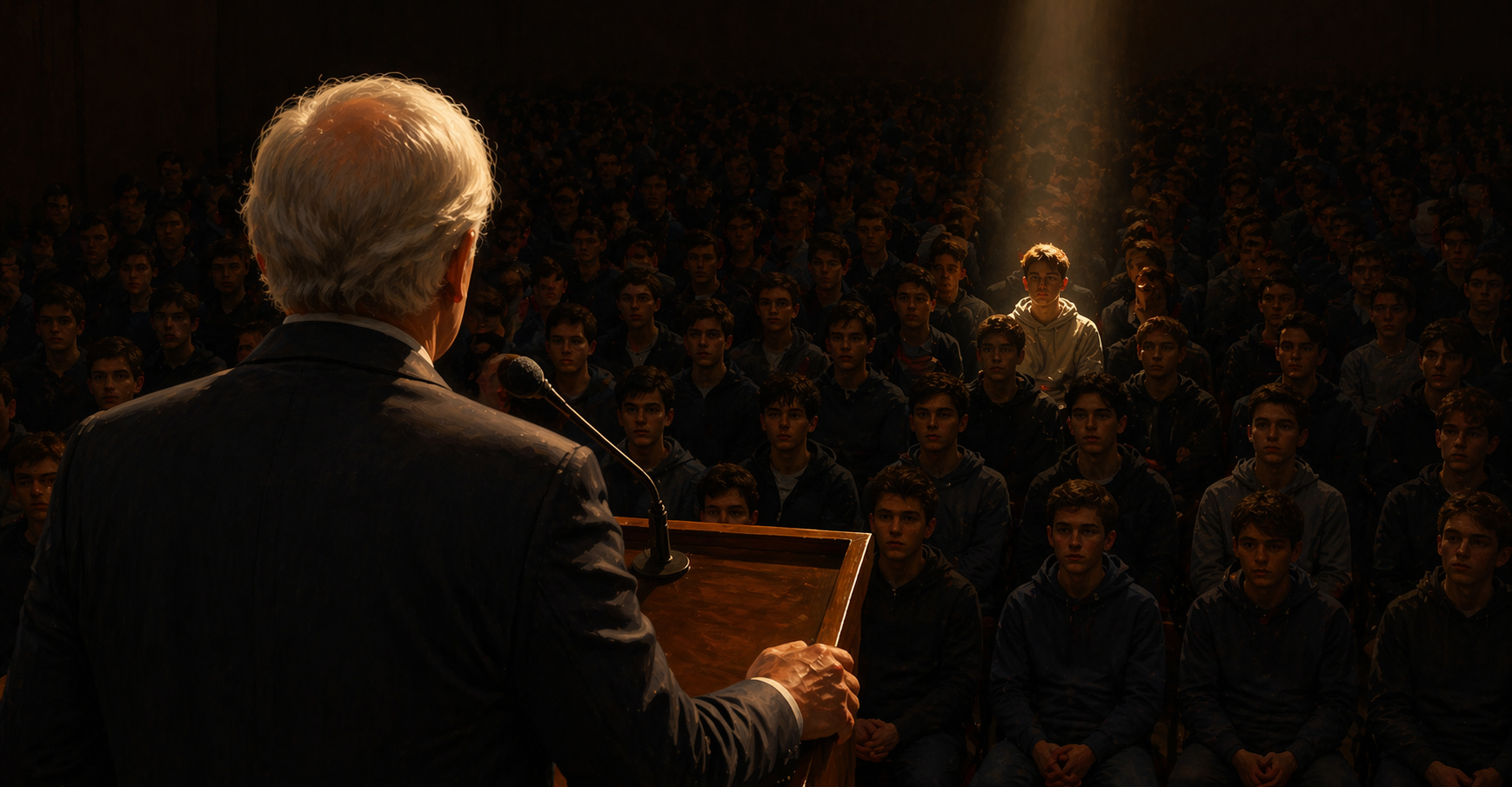
The summer I turned seventeen, I went to Evergreen Boys State, a civic education program run by the American Legion since 1940. A week away from home at Eastern Washington University, the first college campus I had ever stood on. A thousand seventeen-year-old boys figuring out what they thought about the world, most of us pretending we had already figured it out.
I sat in an auditorium and listened to a man named C.G. “Coke” Roberts deliver a keynote address. He was in his late fifties or early sixties. He had the bearing of a commanding officer without the bark of one. He demonstrated authority without wielding power. He commanded the room’s attention without demanding it. In an auditorium full of teenage boys whose attention span had a short lease, mine did not drift.
He had a thesis statement. One sentence. He said it clearly and then spent the rest of his address applying it to life.
I will do what I say I will do when I say I will do it.
I was seventeen years old and something in me went quiet and still. There was honor in that sentence. Integrity in it. Words that felt larger than my seventeen-year-old life but fit the sentence perfectly. Not words that teenage boys in 1990 used without irony, but the right words for what I felt. A standard. A high jump pole raised to a height worth clearing.
I memorized it before I left the auditorium.
What I did not do, in the years that followed, was live by it particularly well. Community college arrived with a full-ride scholarship for the first two years, and I drifted through it the way young men sometimes do when the urgency has been temporarily removed. I was trying to figure myself out. My father passed away in 1995 before I graduated from university, and that kind of loss has a way of making everything feel like a blur, with no memories or impactful experiences to fondly look back on in later life. I crossed the finish line with my bachelor’s degree and got my first real job a month later. Entry-level tech support. Ten months. No performance issues this time, but I was a nervous, emotionally-confused twenty-three-year-old working alongside people who were all older than me, without a father to call when I didn’t know what to do next. I was starting my approach, but I hadn’t yet found the pole.
In 1997 I got hired at the university where I still work today. Better pay. Real responsibilities. And in 1998, the circumstances of my life arranged themselves into something that changed everything.
I bought a townhome.
At 24 years old, I had a mortgage. A car loan. Monthly bills that did not care about my emotional state or my social maturity or whether I was still figuring things out. I was a homeowner, alone, with a job that had to work because there was nothing underneath me if it didn’t.
And somewhere in the back of my memory, a sentence I had memorized in an auditorium eight years earlier came back in large, bold letters.
I will do what I say I will do when I say I will do it.
This time it wasn’t inspiration. It was about integrity, and doing things when you think no one is watching you. It’s taking the high road and exceeding the client’s expectations when it is so easy to phone it in. I would not get fired for poor work performance. I would not get fired for a poor attitude. There was too much at stake, I knew exactly what being fired felt like, and I was never going to feel that again. The high jump pole went up. Higher than it needed to go. Higher than my bosses set their expectations for me. Higher than my colleagues set for their own work ethic. I chose to raise my bar because a man I heard speak once on a summer afternoon in Cheney, Washington, had shown me what it looked like to hold yourself to a standard. I spent eight years carrying that standard around, waiting for the moment it mattered enough to use.
That moment was a mortgage at twenty-four.
Coke Roberts probably never knew his thesis statement outlived that auditorium. He almost certainly never imagined it landing in a tech support office at a university in the Pacific Northwest three decades later, quietly governing how a Canvas LMS administrator engages with faculty, responds to emails, shows up for consults, and builds a relational practice that nobody ever taught him and no certification program ever validated.
But here we are...and here I am.
I will do what I say I will do when I say I will do it. This isn’t a productivity hack. It isn’t a professional branding statement. It’s the sentence a seventeen-year-old boy memorized in a room full of strangers and carried for the rest of his life because it contained something he recognized as true before he was old enough to explain why.
The bar is still up. I clear it every morning.
More later...