
Back when I was a little shaver in fourth grade, I got pushed around and beat up by a few boys in my class, and I didn’t fight back. It’s a long story as to the why, but to this day I still chalk that up to being a failure. I’ve replayed so many times the image has gone soft, but I still remember the names — Sean, Matt, and Damian. The colors of their t-shirts are faded, their young faces blurred, and the emotional impact has worn thin from decades of life. I couldn’t tell you anymore whether the details are accurate or whether I’ve edited them so many times in my mind’s editing bay that what remains is more mythology than memory.
The VHS tape is wearing thin on that one. But I still have it.
The post-COVID era failures are a different story. Those are 4K. Crisp, high-contrast, every word preserved in full resolution. The moment someone above my paygrade challenges my expertise in front of colleagues in an in-person staff meeting. The email from a client on the rampage about an issue with their Canvas course while CC’ing all my supervisors that hit me like an unexpected snowball. The trolling comment an IT peer made in a Microsoft Teams channel. It catches you off-guard, it creates a blitzkrieg of confusion in my mind as to why they launched that salvo. And it leaves streaks of low-level shame streaming down my face.
Nobody notices, of course. That’s the other thing.
I’ll tell you what the replay of those moments feel like. There’s dread in it, the reluctant awareness that I’m about to put myself through something again that I’ve already survived once. There’s cringe, the specific, wincing discomfort of reliving a moment where I didn’t say the appropriate thing, didn’t establish the boundary, didn’t counter the dismissive remark with a perfectly calibrated response that eventually arrived two hours later when I was in the car or sitting slouched at the dinner table chomping on my salad. There’s frustration, directed entirely inward, expressed externally as furrowed brows that make me look angry at something or someone in the room. I’m not angry at anything except myself. I’m in a courtroom in my own mind, arguing a case that already closed, handing myself a verdict I can’t appeal.
Picture a basketball. Now picture me in a swimming pool forcing it underwater with both hands. See in your mind the effort required to keep it submerged. It’s enormous and exhausting and invisible to anyone standing at the edge.
I grew up in the ‘80s, where conflict between boys on the playground had options that aren’t available in a professional setting in 2026. Despite my exterior (I am a large man, shaved head with goatee, the kind of person who automatically gets placed in the threatening box in certain kinds of rooms), I am always, always fighting (not literally) to maintain a reputation worthy of respect. Which is double-hard when your position on the org chart carries no authority over anyone. No direct reports. No title that commands deference. Just the work, and the reputation the work builds, and a hope that the work is enough.
It isn’t always enough for everyone.
There are people in every workplace who use hierarchical status as a paintball gun. The shots aren’t lethal. They don’t end careers or break bones. But they hurt when they land, they leave a mark, and they take a while for the bruise to fade. And the person firing those shots knows exactly what they’re doing. They can’t come at me physically. So they engage with the hubris and self-importance that comes with a job title higher than mine, in public settings where a response would cost me more than silence.
They see a thin-lipped horizontal smile. Narrowed eyes. A brief, loaded silence while my mind runs scenarios of responses and outcomes in rapid-fire fashion. The mature high road of a dignified response of tacit Teflon. Or I let my hurt emotions let my mouth get the better of me and start wrestling a pig in the pen.
The pig enjoys it. I know this. I begrudgingly choose the Teflon.
The button is pressed, and the videotape starts recording.
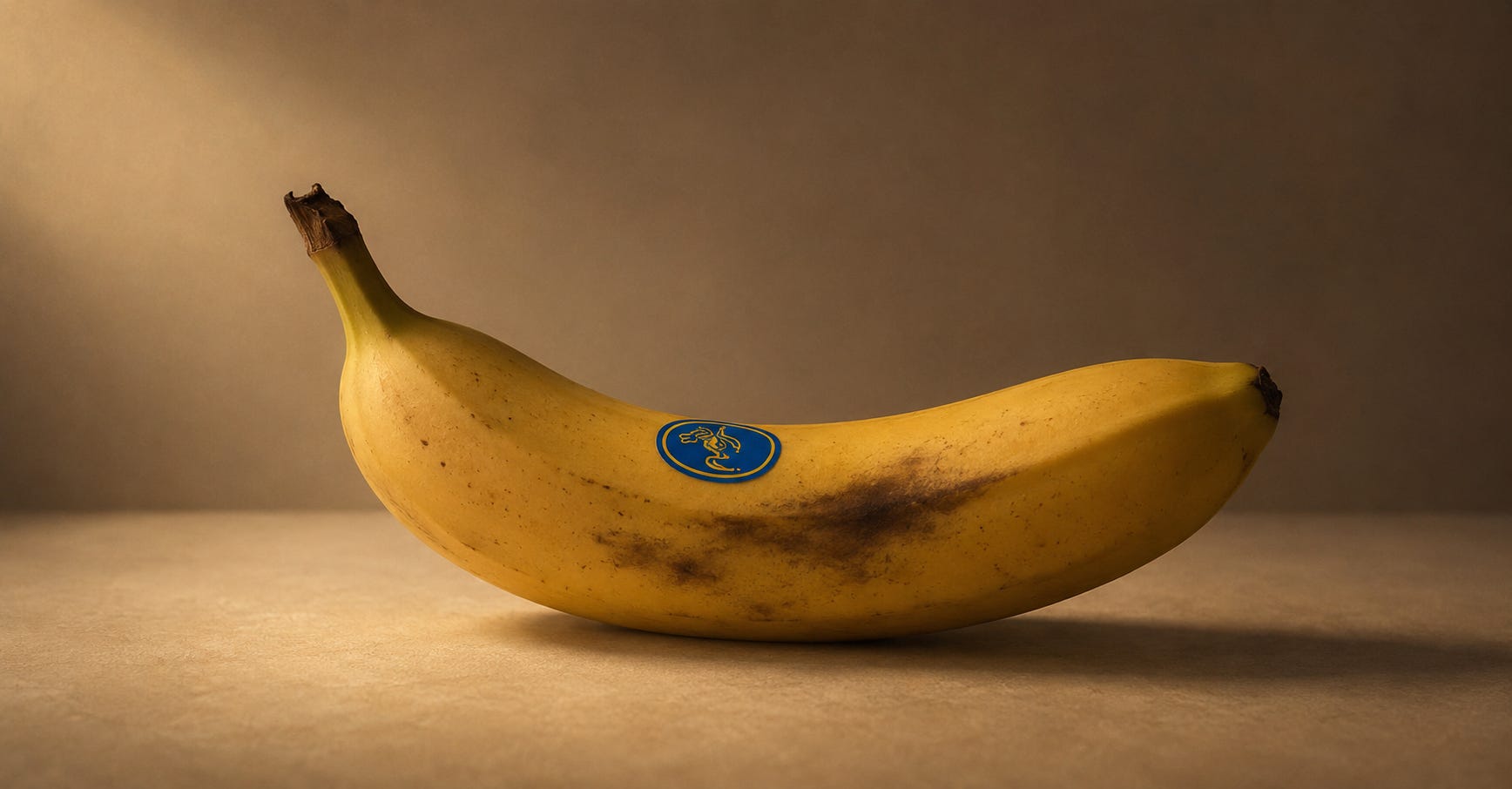
When someone safe asks me about the impact of negative treatment, I look at them with a fairly straight deadpan face and say quietly: “I’m like a Chiquita banana. I bruise easily.” It’s the tragic comic attempting to provide humor while cautiously creating the possibility that I’m actually getting hurt. Which I am. The imposing exterior is not impact-resistant. It just looks that way from the outside.
Here is what I’ve learned to do instead of playing the tape over and over until it wears thin.
I pause a moment and look directly at the person. I say calmly: “Before I respond, I want to be clear about what you just said. My inner narrative is telling me that you...” and I name it, plainly, without accusation, without theater. Then I drop my voice slightly, and ask slowly: “Was that your intention?”
That question does more work than any comeback I’ve ever constructed on the VHS tape. It separates what was said from what was meant. It puts the basketball back in the other person’s hands without launching it out of the pool. It forces a moment of honest accounting for both of us. Before I say the appropriate thing, establish the boundary, or state a perspective to “manage up.” And I eject the VHS tape and put it back on the shelf.
I didn’t learn this in professional development training at work. I learned it in my marriage. In the unglamorous, humbling, necessary work of learning how to stay in relationship with the woman who means the most to me in the world, the person I chose. The communication skills I built at home to prevent ruptures in the most important relationship in my life turned out to be exactly the skills the professional setting needed and never thought to teach.
I brought them to work the way I bring everything to work: quietly, without announcing it, as a gift nobody asked for and nobody knew they were receiving.
I won’t pretend the “Was that your intention” subroutine has patched all the bugs in my SelfOS. The VHS tape still records sometimes. But I’ve learned not to make vows, because vows set things in motion that I don’t want to contend with. What I do instead is get to a place, after sitting through enough replays, where my inner narrative says: when the warning signs for this occur again, you will take this route. A subroutine, not a promise. A patch, not a pledge.
Interestingly, the gym helps with my SelfOS. Blaring loud music in my earbuds comprised of double-kick drums, chugging electric guitars, and shrieking vocals demanding full attention. Some may think that would be an audio paintball, but it gives my brain permission to stop processing what the silence and solitude of working remotely from home couldn’t interrupt. It takes a sonic blast to quit the review loop that quiet couldn’t. The same person who needs soft acoustic guitar albums on Saturday morning needs something completely opposite to forcibly reboot the system after a bad Wednesday. Both are medicine. Opposite prescriptions for opposite conditions.
If you recognize this videotape, you’re not broken. You’re someone who cares enough about the work, the relationships, and the standard to keep reviewing the footage. The cost of that caring is real. It lands on you in private, in places nobody thinks to check, and it fades away eventually without much fanfare.
My bruise from the professional paintball eventually fades. My subroutines get smarter. And somewhere in the gap between the paintball going thwack and the videotape finally switching to a static screen, I become more of the person I’m trying to be.
More later...