
In 2011, after fifteen years as a professional technologist at Western Washington University, I’d gotten pretty good at my job providing desktop support to a couple hundred clients spread across numerous departments. I established a solid rapport with many of my clients way before I developed the concept of being a “relational technologist.” I was just an earnest, funny, eager to help young man who wasn’t arrogant or snooty about how I shared my expertise with tech. The rapport I established had many clients viewing me as their go-to guy, saying hi to me outside of work on evenings and weekends. All from recognizing a face that had helped them in a kind way.
I ran into one of those clients on the way back to my office from an unrelated tech support visit. They needed a new phone and asked me what to get.
I didn’t tell them what phone I had and why they should follow my lead. After all, I am an IT professional, right? I am an expert. Everyone should do what I do and do what I say. That’s what most techs believe. Not me. Instead, I asked my client some questions. What phone did they currently have? What did they primarily use it for? What did they enjoy about it? How much were they hoping to spend? Six minutes of a friendly interview, and at the end of it I suggested a phone that actually fit what they’d told me, not what I happened to be carrying in my own pocket. They thanked me for the recommendation, and said something that altered the next fifteen years of my life.
You know, you should really charge money for this advice. People would be happy to pay you for it.
I downplayed it. Graciously, I hope. I’m just happy to help, I said, happy to share nerdy information with people who want it. But the comment stuck with me after work. I thought about it on the drive home. I mentioned it to my wife that evening almost as an aside as I was munching on my dinner salad, and she mentioned that a colleague of hers was a freelance business coach. I knew whom she was referring to because he’d actually asked me Mac questions before. Evidently his own IT support person “only worked on Windows machines.”
I made an appointment to see the freelance business coach in his office. Even though I told him what I was cautiously thinking about, he already knew my strengths. He gave me three pieces of homework: a Washington State business license, a .com domain for a basic business website, and business cards with my name, title, phone number, and email. Back then that cost me about $70 including tax and took about four hours of my time, mostly fiddling with website configuration settings to make it look just the way I like it.
He also had a client of his own already lined up for me. Someone who needed technology support for their business executive consulting practice and was ready to meet with me the moment my homework was completed.
I made a brief phone call to confirm the introduction, verify we had a mutual professional contact in common, and schedule a time to meet at his home office to go over his computer issues.
Did you catch what I just stated? His home office. Keep in mind this was 2011, nine full years before a pandemic would make the phrase “working from home” a universal experience shared by half the planet. Walking into someone’s home office in 2011 wasn’t a normal thing. It was a little odd, if I may be candid. It was a glimpse into a way of working that hadn’t yet become the normal day-to-day that I’ve had for the past six years with the University.
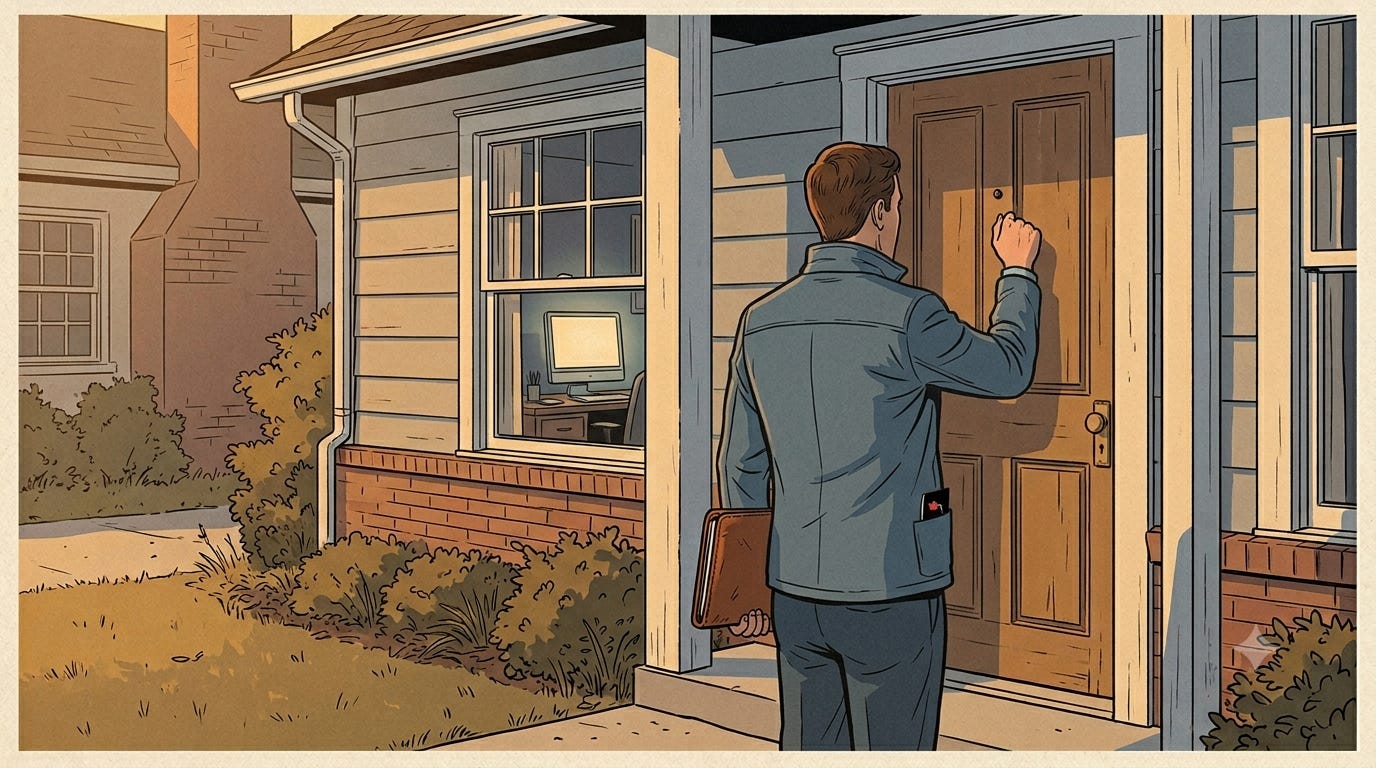
I didn’t know it at the time, but I was beginning something very important in my life as I approached his front door. With fifteen years of being a regular ol’ university employee; predictable, institutional, entirely within someone else’s org chart, I was preparing to enter a stranger’s home office, email an invoice I hadn’t written yet, and hand him a business card that was unlike any other business card anyone had ever seen.
That client became Client #1.
More later...